

Booking a minibus with a driver in London involves more than choosing the cheapest quote and hoping for the best. After working in passenger transport for over a decade, I’ve seen too many groups caught out by unclear pricing, vehicles that don’t match expectations, or operators who cut corners on licensing.
This guide explains what you’re actually paying for when you hire a chauffeur-driven minibus in London, what the law requires from legitimate operators, and how to avoid the common mistakes that leave people stranded or out of pocket.
What “Minibus Hire with Driver” Actually Means
When you hire a minibus with a driver in London, you’re not just renting a vehicle. You’re engaging a licensed passenger transport service that operates under strict legal requirements.
The driver isn’t someone who “knows London reasonably well.” For commercial passenger transport, they must hold a Category D1 driving licence (for vehicles carrying 9-16 passengers) and a valid Driver Certificate of Professional Competence. This CPC qualification requires 35 hours of periodic training every five years, covering safety, customer service, and regulatory compliance.
The operator, the company providing the service, must hold a PSV Operator Licence issued by the Traffic Commissioner. This isn’t a formality. It requires proving financial standing, professional competence, and vehicle maintenance standards. Smaller 8-seater vehicles operate under Private Hire Vehicle licensing through Transport for London or local authorities, which still requires proper insurance, vehicle inspection, and driver vetting.
Every driver working commercially with passengers must undergo an Enhanced DBS check. This is mandatory for regulated activities like school transport or services involving vulnerable adults, and reputable operators apply this standard across all their drivers regardless of the booking type.
When you see claims about “certified” or “qualified” drivers, this is what it should mean. If an operator cannot show you their PSV Operator Licence number or confirm their drivers hold valid CPC cards, you’re dealing with someone operating outside the legal framework.
Understanding Vehicle Sizes and Real Luggage Capacity
Minibuses are typically categorised by passenger capacity: 8-seater, 12-seater, 14-seater, or 16-seater vehicles. These numbers refer to maximum seating, not comfortable capacity with luggage.
A 16-seater minibus filled with 16 passengers and 16 full-size suitcases creates a physical impossibility. The luggage compartment on a standard minibus accommodates perhaps 8-10 medium cases. The rest goes on laps, underfoot, or doesn’t come.
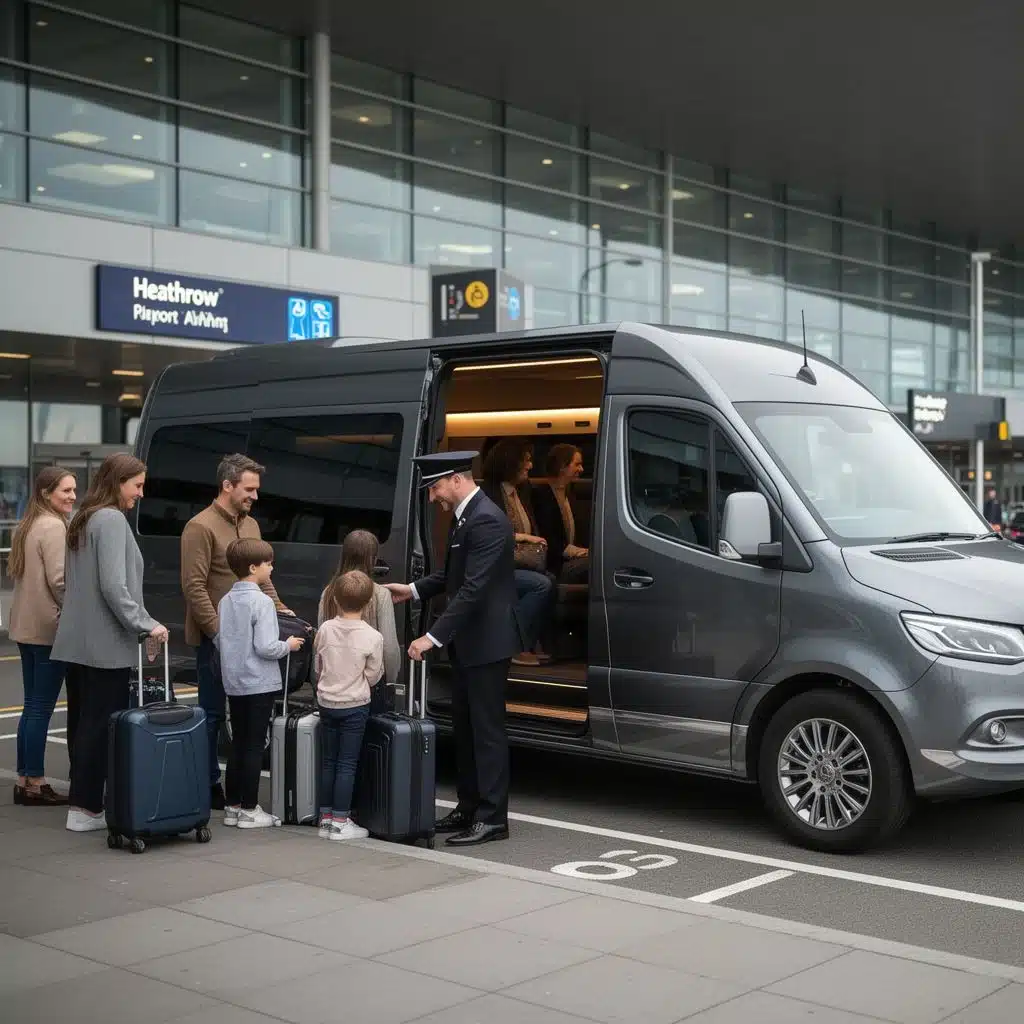
This matters particularly for airport transfers. If you’re collecting a group from Heathrow with everyone bringing cabin bags plus checked luggage, you need honest advice about vehicle size. A 12-seater with 12 passengers and minimal luggage works fine. The same vehicle with 12 passengers returning from a two-week holiday does not.
When booking, specify actual luggage. Not “some bags” but “14 people, each with one large suitcase and one carry-on.” Legitimate operators will tell you if the vehicle you’ve requested won’t work. Those chasing the booking will say yes and leave you sorting it out at Heathrow Terminal 5 at midnight.
Executive minibuses often sacrifice a row of seats for additional luggage space and more comfortable seating. They cost more, but for airport transfers or longer journeys, the premium makes sense.
London Charges: ULEZ, Congestion, and Airport Fees
Operating in London involves several mandatory charges that affect your final cost. Understanding these helps you identify whether you’re getting an honest quote or one that will increase once the journey is complete.
Ultra Low Emission Zone (ULEZ)
ULEZ now covers all of Greater London. Diesel minibuses must meet Euro 6 standards to avoid the £12.50 daily charge. Heavier vehicles over 5 tonnes face a £100 daily charge if non-compliant.
Most modern fleet vehicles meet these standards, but you should confirm this when booking. The charge applies per day, not per journey, so multiple trips on the same day don’t multiply the cost.
Congestion Charge
If your journey involves Central London between 7am and 6pm on weekdays, or noon to 6pm on weekends, the £15 daily Congestion Charge applies. This covers a defined zone roughly from King’s Cross south to Vauxhall and from Paddington east to Tower Bridge.
For a West End theatre trip or a corporate event in the City, this charge is unavoidable. Operators handle payment through their account systems, but it should appear on your quote if the journey involves these areas.
Airport Drop-Off Charges
Heathrow and Gatwick both impose a mandatory £5 terminal drop-off fee per entry, managed through automatic number plate recognition. This isn’t optional or negotiable—it’s charged to the vehicle operator and should be included in airport transfer quotes.
Stansted, Luton, and London City Airport have different fee structures, typically ranging from £3-£5 for forecourt access.
The Transparency Test
A professional quote clearly itemises these charges. If your quote simply says “£200 for the journey” without mentioning ULEZ, Congestion, or airport fees, ask specifically whether these are included. Discovering hidden charges after you’ve committed to a booking creates unnecessary disputes.
Airport Transfers: What Actually Happens
Airport transfers represent a significant portion of minibus hire bookings in London. Understanding how these work prevents most common problems.
Flight Tracking and Delays
Legitimate operators monitor flight arrivals for airport pickups. This doesn’t mean they’ll wait indefinitely if your flight is six hours late, but reasonable delays—typically up to 90 minutes—are accommodated without additional charges.
Beyond that, you’re into waiting time charges, usually £15-25 per additional 30 minutes. Some operators cannot guarantee vehicle availability for severe delays and may need to reschedule, particularly if the driver has another booking.
If your flight is delayed significantly, call the operator as soon as you know. Don’t assume they’ll just “work it out” whilst you’re in the air.
Meet and Greet vs Curbside Pickup
Meet and greet service means your driver enters the arrivals hall with a name board and assists with luggage. This costs more because the driver pays for parking and spends additional time. Standard service is curbside pickup where you exit the terminal and locate the vehicle in the designated pickup area.
For groups unfamiliar with Heathrow or arriving late at night, meet and greet eliminates confusion. For experienced travellers, curbside pickup works perfectly well and costs less.
Terminal Logistics
Heathrow’s five terminals are not interchangeable. Terminal 5 is British Airways’ base and sits separately from Terminals 2, 3, and 4. Switching terminals if your driver is waiting at the wrong one wastes time and money.
When booking, confirm your exact terminal and, if known, your airline. This matters more at Heathrow than smaller airports.
Gatwick’s North and South terminals require checking which your flight uses. They’re connected by a shuttle train, but you don’t want your driver waiting at North whilst you emerge from South.
Driver Hours and Journey Limitations
Commercial drivers operate under GB Domestic Driver Hours Rules (for most UK-only journeys) or EU rules (for international work or operator choice). These regulations exist for safety and affect what you can reasonably book.
Under GB Domestic rules, drivers must not exceed 9 hours driving in a day (extendable to 10 hours twice per week), and 56 hours in any week. After 5.5 hours driving, they must take a 30-minute break.
This matters for full-day hires. If you book a minibus from 8am to 8pm for a corporate event with multiple stops across London and the Home Counties, your driver is legally required to take breaks. This isn’t optional or negotiable.
Professional operators plan for this. The driver takes their break whilst your group is at lunch or during a scheduled stop. Less professional operators ignore it, putting you at risk if stopped by DVSA enforcement.
For longer journeys—say, London to Edinburgh for a group trip—drivers may need overnight rest or the operator may use a two-driver crew. This significantly increases cost but makes the journey legal and safe.
Pricing Structure: What You’re Actually Paying For
Minibus hire with a driver in London typically costs £65-£120 per hour depending on vehicle size, with most operators requiring a minimum booking period of 3-4 hours.
What Influences Your Quote
Vehicle Type: An 8-seater executive MPV costs less than a 16-seater Mercedes Sprinter. The larger the vehicle, the higher the running costs—fuel, insurance, maintenance—and these pass through to your price.
Duration and Distance: Hourly rates apply for time-based bookings. Airport transfers often use fixed pricing because the route is predictable. A Heathrow to central London transfer for 12 passengers typically costs £140-£180, whilst an hourly booking for a full-day London tour runs £600-£800 for the same vehicle.
Time of Day: Early morning pickups before 6am or late-night returns after midnight often attract premiums of £20-40. Drivers work unsociable hours, and this reflects in pricing.
Day of Week: Weekend rates, particularly Saturdays, typically run 15-20% higher than midweek bookings due to demand for weddings and events.
Waiting Time: Most quotes include 15-30 minutes of waiting time at pickup points. Beyond that, charges apply. For airport pickups, this rarely becomes an issue unless your flight is severely delayed.
Additional Services: Child seats (legally required for younger passengers), meet-and-greet service, on-board refreshments, or WiFi all add to the base cost.
Understanding VAT Exemptions
Most passenger transport services in the UK, including group minibus hire with driver, are exempt from VAT under standard HMRC rules. This means the price you’re quoted should be the final price without VAT addition. If an operator mentions adding VAT to a transport service quote, this warrants clarification about what exactly you’re being charged for, as the transport element itself should be VAT-exempt.
Why the Cheapest Quote Often Costs More
Price-beating claims sound appealing until you discover what you’ve actually booked. The “executive minibus” becomes a standard vehicle. The “experienced London driver” doesn’t know that roadworks have closed your preferred route for three months. The “comprehensive insurance” doesn’t cover your corporate laptop left on the back seat.
Legitimate operators explain what you’re paying for. Their quotes include London charges, specify vehicle standards, confirm driver qualifications, and outline cancellation terms clearly. These details aren’t included to justify high prices—they’re there because experienced customers ask for them.
Common Booking Mistakes and How to Avoid Them
Mistake 1: Booking Too Late
“Can you do 8pm tonight?” sometimes gets a yes, but usually when other customers have cancelled or on quieter midweek periods. Weekends, particularly Saturdays, need 2-4 weeks’ notice for reliable availability. Major events—cup finals at Wembley, Christmas parties, New Year’s Eve—require booking months ahead.
Mistake 2: Underestimating Journey Times
Google Maps suggests 40 minutes from Westminster to Wembley Stadium. On a Saturday afternoon when there’s a major event, you’re looking at 90 minutes. Experienced operators know this and build buffers into pickup times. If you insist on leaving “just enough time,” you’ll likely arrive late and stressed.
For airport transfers, building a sensible buffer matters enormously. International flights require arriving 3 hours ahead. Cutting this to 2.5 hours because “traffic should be fine” creates unnecessary anxiety and leaves no margin for unexpected delays.
Mistake 3: Unclear Group Size
“About 12 people” isn’t helpful information. Operators need exact numbers because a 12-seater holds exactly 12 passengers, not 13. If your 13th person appears on the day, they cannot travel. Legally, the vehicle cannot exceed its registered passenger capacity.
If you’re genuinely uncertain, book for the maximum possible and inform the operator if numbers reduce. Booking too small and trying to squeeze extra passengers in doesn’t work.
Mistake 4: Ignoring Luggage Reality
“Everyone has bags” tells the operator nothing useful. One person’s “bag” is a carry-on rucksack. Another’s is a 30kg suitcase and a guitar case.
For airport transfers, assume each person brings one large suitcase and one carry-on. If that’s not the case, specify what you’re actually bringing. Operators can advise whether additional luggage space is needed or if a larger vehicle makes sense.
Mistake 5: Assuming Alcohol Is Permitted
Many groups assume they can drink during the journey, particularly for hen parties or corporate celebrations. Some operators permit this for private hires with appropriate arrangements. Many don’t, either due to insurance restrictions or company policy.
If having drinks during the journey matters to your plans, clarify this when booking. Discovering the prohibition when you board with chilled wine and champagne creates awkward conversations.
How to Choose a Reliable Operator
Check Licensing
Ask for the operator’s PSV Operator Licence number if they’re providing 9+ seater vehicles. This is a public record you can verify through the Vehicle Operator Licensing system. For 8-seater services, confirm they hold valid Private Hire Vehicle licensing through TfL or the relevant local authority.
If they cannot or will not provide this information, use someone else.
Verify Insurance
Operators should carry both motor insurance (covering the vehicle and passengers) and public liability insurance (typically £5-10 million coverage). Seeing certificates or confirmation of this coverage isn’t unreasonable when you’re entrusting your group’s safety to their service.
Confirm Driver Qualifications
For commercial passenger transport, drivers need Category D1 licences and valid CPC cards. Enhanced DBS checks should be standard, not a premium service. These aren’t negotiable legal requirements—they’re the baseline for operating legitimately.
Look for Fleet Ownership
Companies operating their own fleet vehicles have direct control over maintenance, cleanliness, and replacement if something goes wrong. Those brokering services through subcontractors introduce additional points of failure.
If your confirmed minibus breaks down on the M25 an hour before your flight, an operator with their own fleet can swap vehicles immediately. A broker needs to find alternative provision, which may not exist at short notice.
Read Cancellation Terms Carefully
Life happens. Flights get cancelled. People fall ill. Weather disrupts plans. Understanding the cancellation policy before booking matters.
Standard terms typically allow full refunds with 48+ hours notice, partial refunds for 24-48 hours, and no refund for shorter notice. Some operators show flexibility for genuine emergencies with documentation. Others apply terms rigidly regardless of circumstances.
Knowing this in advance helps you decide whether to proceed with a booking when you’re uncertain about your plans.
Vehicle Age and Standards
Fleet age varies significantly between operators. Vehicles under 3 years old generally mean fewer mechanical issues, better fuel efficiency, and modern features like air conditioning, USB charging, and Bluetooth connectivity.
Older vehicles aren’t inherently problematic if well-maintained, but they’re more prone to unexpected breakdowns. For time-sensitive bookings like airport transfers or wedding transport, newer fleets reduce risk.
Frequently Asked Questions
Do I need to provide child seats?
No, and you cannot bring your own for the operator to install. Operators providing child seats must ensure they’re correctly fitted and appropriate for the child’s age and weight. This is a legal liability issue. Operators who provide this service charge £10-15 per seat and need advance notice to ensure availability.
Children over 135cm tall or aged 12+ don’t require child seats. Between these ages and sizes, seats are legally required.
What happens if the minibus breaks down?
Reputable operators with their own fleet vehicles can deploy a replacement quickly. Those working through broker networks may face delays whilst alternative provision is arranged.
Ask about breakdown contingency when booking. “We’ll sort something out” isn’t a reassuring answer for a 6am airport departure.
Can we make multiple stops?
Yes, but specify this when booking so the operator can quote accurately. Hourly rates accommodate stops naturally. Fixed-price airport transfers assume direct routes—adding a stop at someone’s house in Surrey to collect luggage changes the job.
Is tipping expected?
Not required but appreciated for exceptional service. 10-15% is generous for longer journeys where drivers go beyond basic transport provision—helping with heavy luggage, accommodating last-minute route changes, or providing local knowledge and recommendations.
Can I bring food and drinks?
Generally yes for private hires, though alcohol policies vary. Check with the operator. Hot food or drinks that might spill or create strong smells are typically discouraged. The driver has to clean the vehicle and use it for the next booking—respect this by keeping it tidy.
What if our event runs late?
Communicate immediately if you’re running behind schedule. Most operators can accommodate moderate delays with waiting time charges. Significant overruns may not be possible if the driver has another booking or would breach driving hours regulations.
Don’t assume the driver will simply wait indefinitely without contact. Call, explain the situation, and agree on a plan.
How do I track my minibus on the day?
Many modern operators offer GPS tracking or will provide the driver’s mobile number so you can coordinate directly. This proves particularly useful for airport pickups where you might need to communicate about which exit you’re using or slight delays clearing customs.
If this matters to you, ask whether it’s available when booking.
Are vehicles wheelchair accessible?
Standard minibuses are not wheelchair accessible. Specialist vehicles with ramps or lifts are available but must be specifically requested. These typically cost more and have more limited availability.
If you need wheelchair-accessible transport, state this clearly when requesting quotes. Discovering on the day that the vehicle doesn’t work for your needs helps nobody.
Choosing Minibus Hire with Driver in London: Final Considerations
Hiring a chauffeur-driven minibus in London should feel straightforward once you understand what you’re actually booking. You’re engaging a licensed passenger transport service that operates under legal requirements for driver qualification, vehicle safety, insurance coverage, and operational standards.
The cost reflects these requirements plus London-specific charges for ULEZ compliance, congestion zones, and airport access. Operators who seem significantly cheaper than others are either cutting corners on legal compliance, hiding costs that will appear later, or running on unsustainably thin margins that affect service quality.
When you book with a properly licensed operator who can demonstrate their credentials, confirm their insurance coverage, and explain their pricing structure clearly, you’re paying for reliability and peace of mind. The vehicle arrives on time, the driver knows London’s roads and alternatives when traffic disrupts plans, and if something goes wrong, they have the resources to resolve it quickly.
For airport transfers, corporate events, wedding transport, or any situation where timing matters and groups need to travel together, this reliability is what you’re actually purchasing. The minibus itself is just the tool that delivers it.
Take time to verify licensing, understand what’s included in your quote, communicate your actual requirements clearly, and book with operators who answer your questions directly rather than deflecting with marketing claims. These simple steps eliminate most problems before they occur.
If you’re ready to book minibus hire in London with a professional driver, make sure you’re asking the right questions and working with operators who can back up their claims with verifiable credentials. Your journey depends on it.
